The Motorola CM140 analog mobile radio is the radio that a million taxi drivers, delivery vans, and construction pickups still use every day. It does not run apps. It does not need firmware updates. It powers on into the same channel it was on yesterday and transmits at up to 45 watts without a loading screen. For fleet managers who value zero downtime over feature lists, that simplicity is the feature.
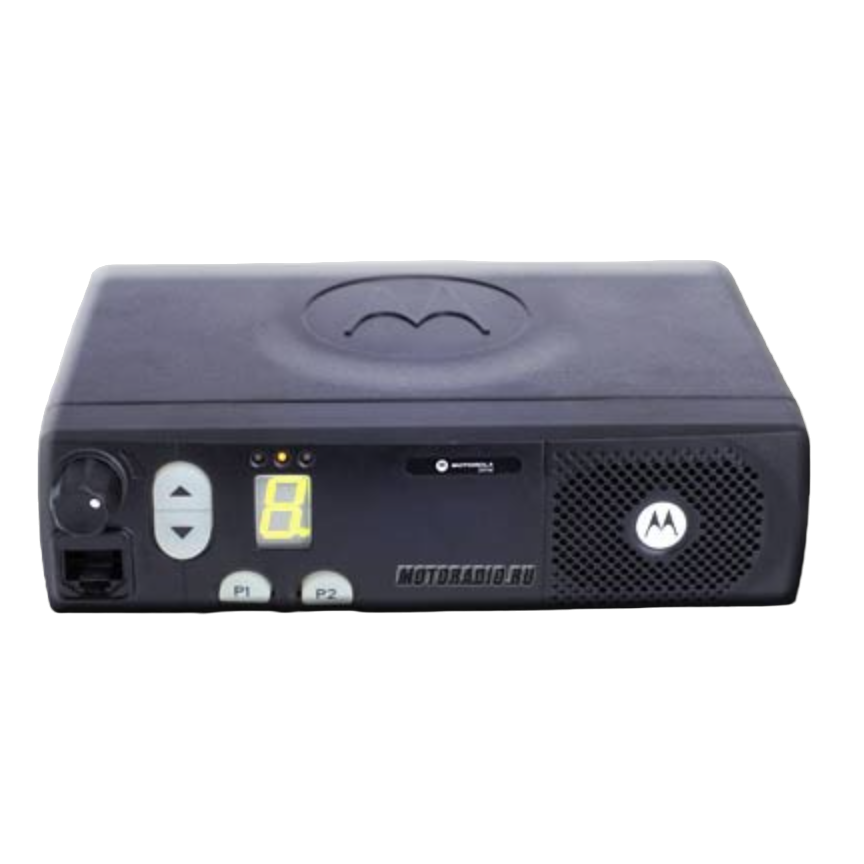
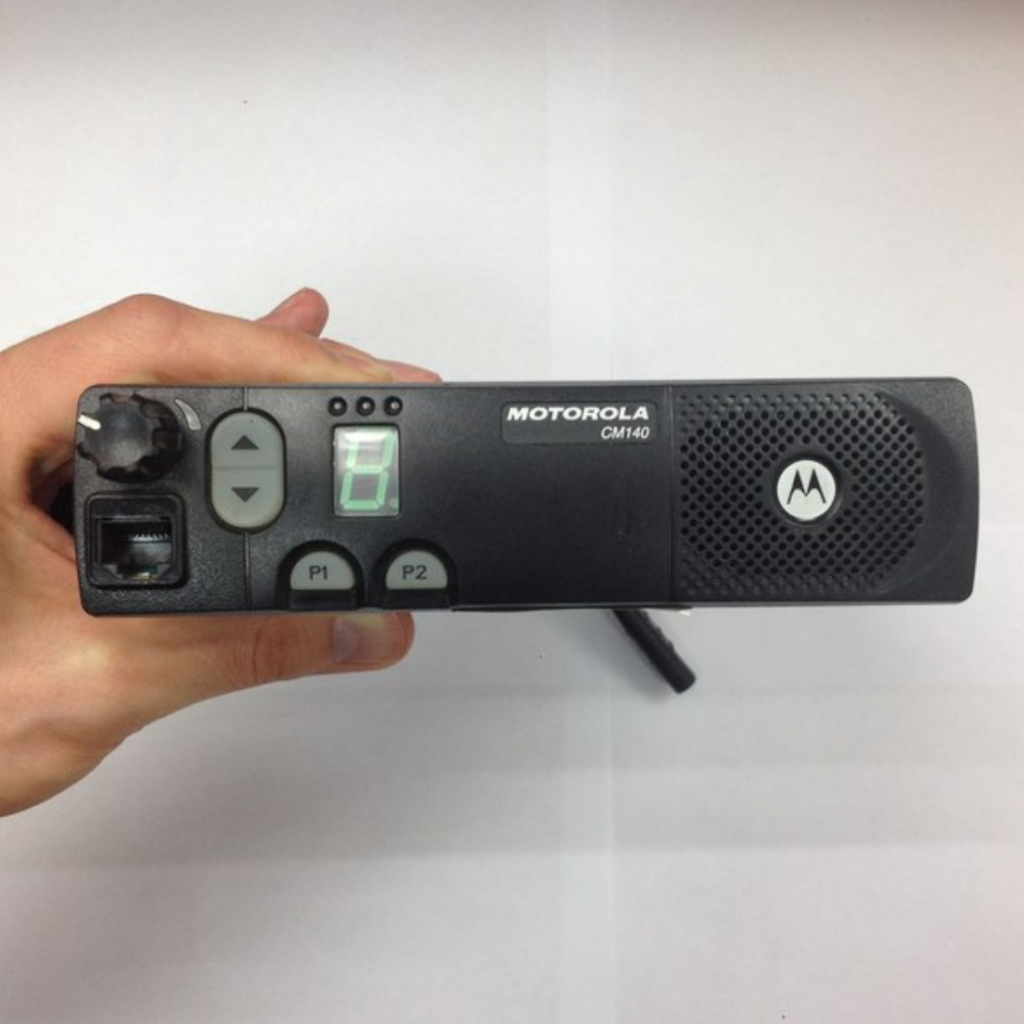
This CM140 commercial vehicle radio offers 4 to 10 channels depending on configuration, with two programmable buttons that double to four functions via a long-press. A single-digit LED display or 8-character LCD variant gives the driver channel confirmation at a glance without pulling focus from the road. VHF models reach 45 watts; UHF models deliver up to 40 watts. The front-facing speaker cuts through engine noise in a cab without an external unit. As a discontinued legacy model, the CM140 also represents one of the lowest per-unit costs in the Motorola mobile lineup, with accessories and replacement parts still widely stocked.
Description
We supply original Motorola Solutions products through our authorized distribution channel. Every unit includes factory packaging, original accessories, and full manufacturer warranty eligibility. Motorola®, MOTOTRBO™, and APX™ are registered trademarks of Motorola Solutions, Inc.
Digital radios promise features. The Motorola CM140 analog mobile radio promises something simpler: it turns on and it talks. That proposition has kept this radio bolted into commercial vehicles for over a decade. It serves taxi bases, concrete trucks, farm utes, and school bus fleets. No one has ever called IT support to troubleshoot a CM140.
Analog Done Right: Why Simplicity Still Wins Fleets
Digital migration makes sense for complex trunking networks. It makes less sense for a plumbing company dispatching five vans across one suburb. The Motorola CM140 analog mobile radio matches that use case exactly. It operates on a handful of conventional channels. It supports CTCSS and DCS tone squelch to filter out other users on shared frequencies. The driver turns one knob for volume and presses one button to transmit. There is no menu tree to navigate. There is no touchscreen to crack. Training a new hire takes ninety seconds. For high-turnover industries, that matters more than any digital protocol upgrade.
Up to 45 Watts: Covering Your Entire Operational Radius
Dispatch clarity degrades with distance. This Motorola 45W mobile transceiver pushes signal through urban concrete and rural tree cover that would silence a handheld. VHF variants output 45 watts on high power. UHF variants reach 40 watts. Both support a low-power mode at 1 to 25 watts for short-range site communication. The variable power setting saves fuel on the vehicle alternator when full output is unnecessary. The front-mounted 4-watt speaker projects audio directly toward the driver. No external speaker accessory is required for most cab installations.
Parts Availability and the Fleet Manager’s Equation
A discontinued radio scares some buyers. It should not. This legacy Motorola mobile unit has the opposite problem: an enormous installed base. Microphones, mounting brackets, power cables, and programming kits remain in active distribution. The CPS programming software runs on widely available Windows environments. A fleet with fifty CM140 units can stock one replacement mic and one spare bracket and cover every failure scenario for years. The economics favor this radio when the alternative is upgrading an entire fleet to digital for a marginal operational gain.
Technical Specifications and Warranty
Every Motorola CM140 analog mobile radio includes a compact microphone, mounting bracket, DC power cable, and warranty coverage.
- Frequency Bands: VHF (136-162 / 146-174 MHz) or UHF (438-470 MHz)
- Power Output: VHF 1-25W / 25-45W, UHF 1-25W / 25-40W
- Channels: 4 to 10 channels (model dependent)
- Display: Single-digit LED or 8-character LCD
- Programmable Buttons: 2 physical, 4 functions via long-press
- Tone Squelch: CTCSS and DCS per channel
- Audio Output: 4 W internal speaker, front-facing
- Channel Spacing: 12.5 / 20 / 25 kHz