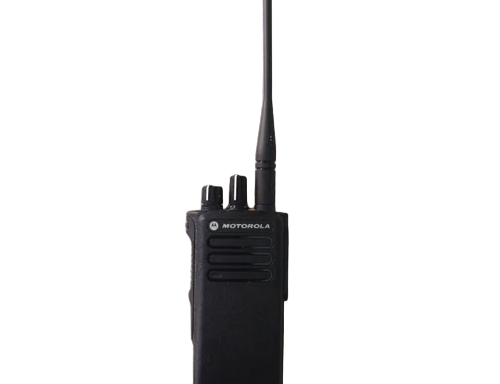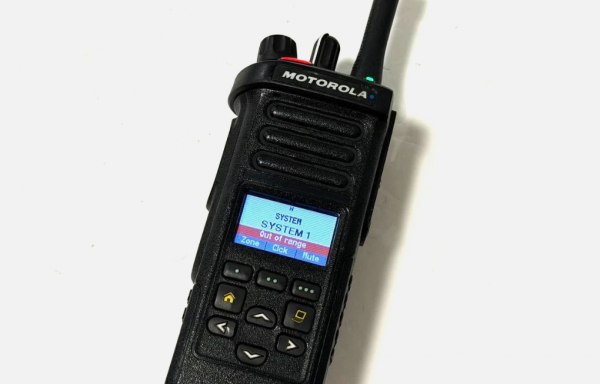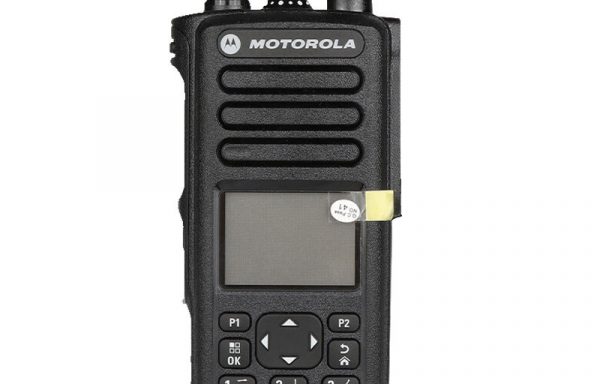
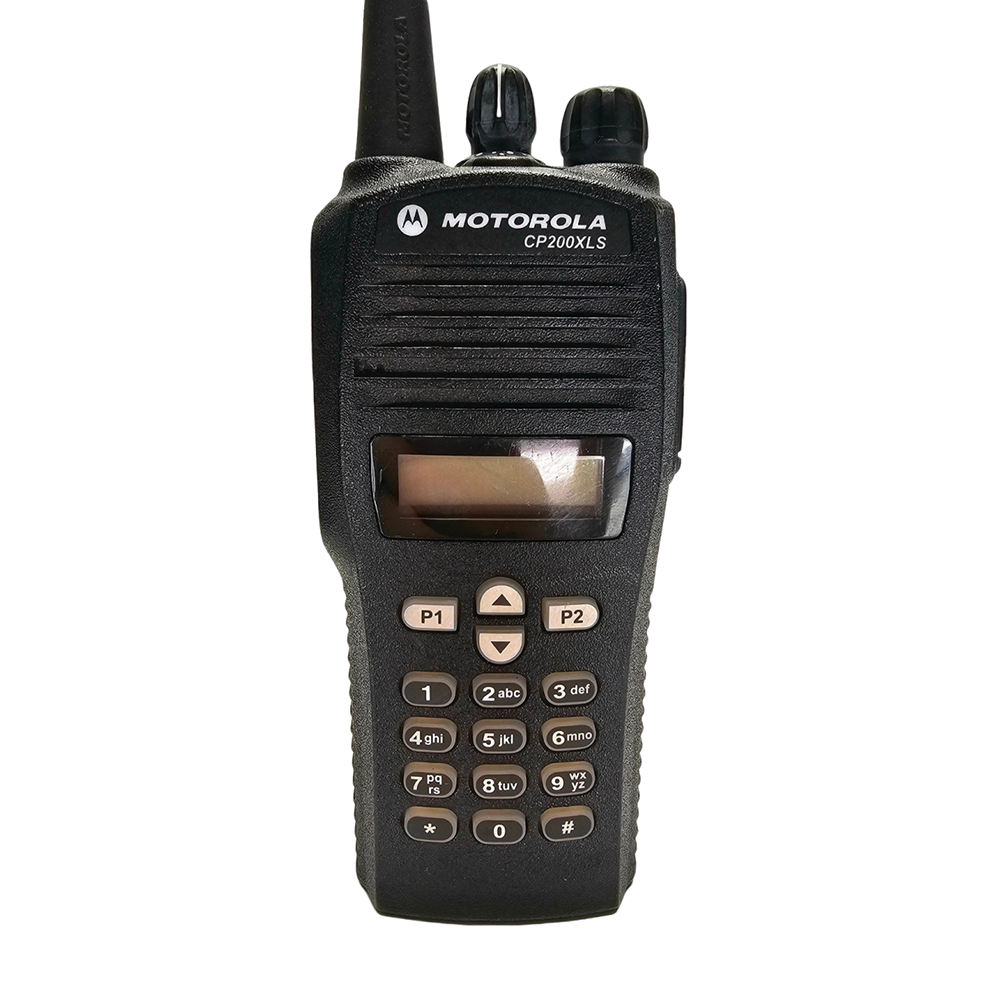
The Motorola CP200XLS trunking radio changes how a radio finds a channel. In a conventional system, the user picks a channel. If that channel is busy, the user waits or picks another. In an LTR trunked system, the radio asks the controller for an available channel. The controller assigns one automatically from a pool of trunked frequencies. The user only selects a talkgroup. The system handles the rest. No busy signals. No channel hunting. No manual intervention. A fleet with five trunked channels can support ten or more talkgroups simultaneously because channels are shared dynamically, not dedicated statically.
This LTR trunked portable radio supports up to 128 conventional channels and 100 LTR talkgroups across 10 sites. Mixed-mode operation allows a single radio to work on both the trunked system and conventional channels. A supervisor can monitor the trunked dispatch talkgroup while keeping a conventional simplex channel for on-site direct communication. The 8-character alphanumeric display shows the talkgroup name rather than a channel number. Four programmable buttons provide one-touch access to scan, monitor, and talkgroup selection. Push-to-talk ID transmits the radio’s unit identifier with every transmission, so dispatch always knows who is speaking. It is the radio that brings enterprise-grade trunking efficiency to commercial and industrial fleets without the cost of a P25 infrastructure.
Description
We supply original Motorola Solutions products through our authorized distribution channel. Every unit includes factory packaging, original accessories, and full manufacturer warranty eligibility. Motorola®, MOTOTRBO™, and APX™ are registered trademarks of Motorola Solutions, Inc.
Conventional radios force users to manage channels manually. Trunked radios manage channels automatically. The Motorola CP200XLS trunking radio puts LTR trunking into a commercial-grade portable. It brings the operational efficiency of trunked systems to fleets that cannot justify a P25 network.
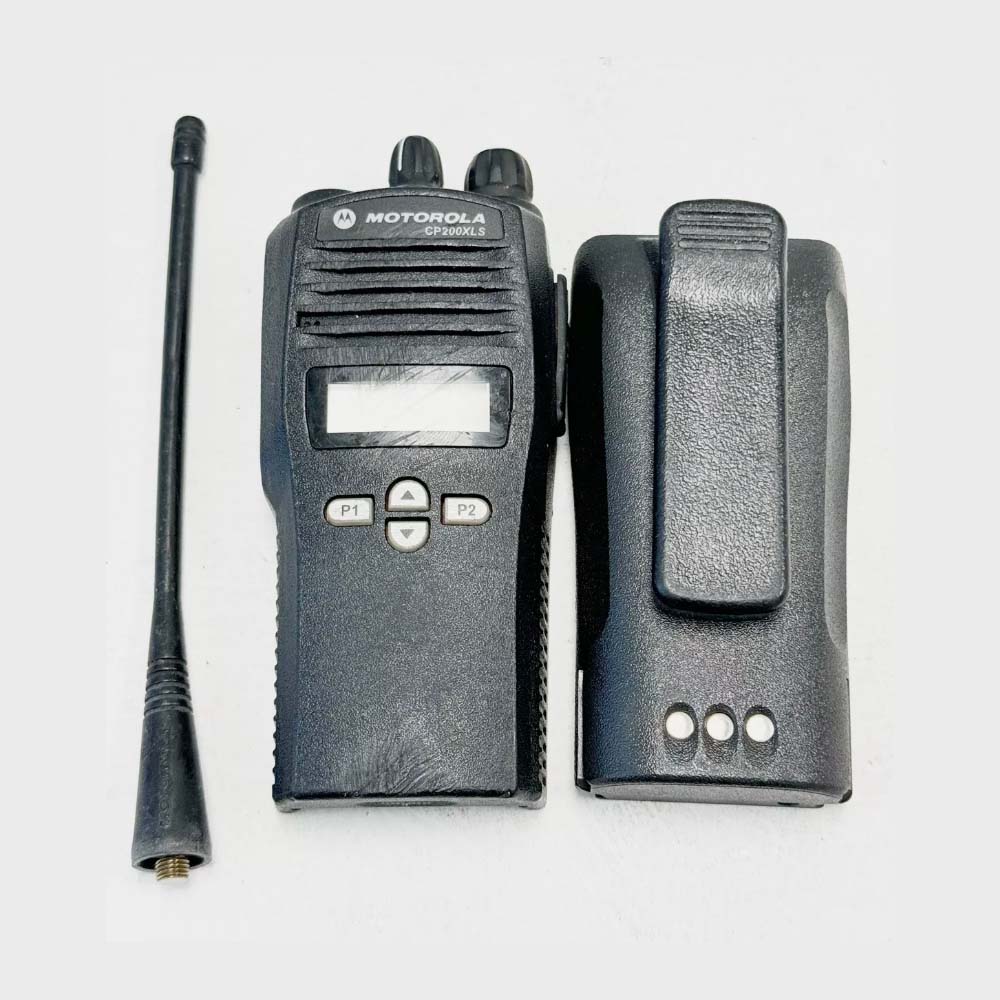
LTR Trunking: The Radio Finds the Channel for You
A five-channel conventional system supports five simultaneous conversations. An LTR trunked system with five channels supports many more. The Motorola CP200XLS trunking radio connects to an LTR controller that assigns frequencies on demand. A user selects a talkgroup and presses transmit. The controller finds an open channel from the pool. The assignment takes a fraction of a second. When the transmission ends, the channel returns to the pool for the next user. This dynamic sharing means a system with five physical frequencies can host ten, twelve, or more talkgroups. Congestion only occurs when every channel is in use simultaneously, which is rare in practice.
Ten Sites, One Hundred Talkgroups: Regional Coverage Without Complexity
A single-site radio serves one facility. This multi-site trunking walkie-talkie covers up to ten LTR sites. The radio scans site controllers and locks onto the strongest signal automatically. A delivery vehicle leaving the warehouse site transitions to the downtown site without driver intervention. A security patrol moving between buildings on a campus stays connected as the radio roams. One hundred talkgroups organize the user base into logical groups. Administration, maintenance, logistics, and security each have a dedicated talkgroup that shares the same physical frequencies. Busy signals disappear because the system, not the user, manages the channel assignment.
One Radio for Both Worlds: Conventional and Trunked Simultaneously
A wholesale migration to trunking is not always practical. This CP200XLS conventional LTR hybrid accepts that reality. The 128 conventional channels operate independently of the 100 LTR talkgroups. A user can keep a conventional simplex channel on the rotary knob for on-site communication while monitoring the trunked dispatch talkgroup in the background. The 8-character display shows the active talkgroup name. Push-to-talk ID identifies every transmission with the radio’s unit number. MDC and DTMF signaling add selective calling and emergency alert capabilities to both conventional and trunked operation.
Technical Specifications and Warranty
Every Motorola CP200XLS trunking radio ships with a battery, antenna, belt clip, charger, and warranty coverage.
- Frequency Bands: VHF 136-174 MHz or UHF 403-470 MHz
- Power Output: VHF 5W / UHF 4W
- Channels: 128 conventional + 100 LTR talkgroups (10 sites)
- Trunking: LTR analog trunking protocol
- Operation: Mixed conventional + LTR trunked
- Display: 8-character alphanumeric LCD
- Controls: Rotary channel knob, 4 programmable buttons, full or limited keypad
- Signaling: MDC, DTMF, QC-II, Push-to-Talk ID
- Audio: X-Pand companding technology