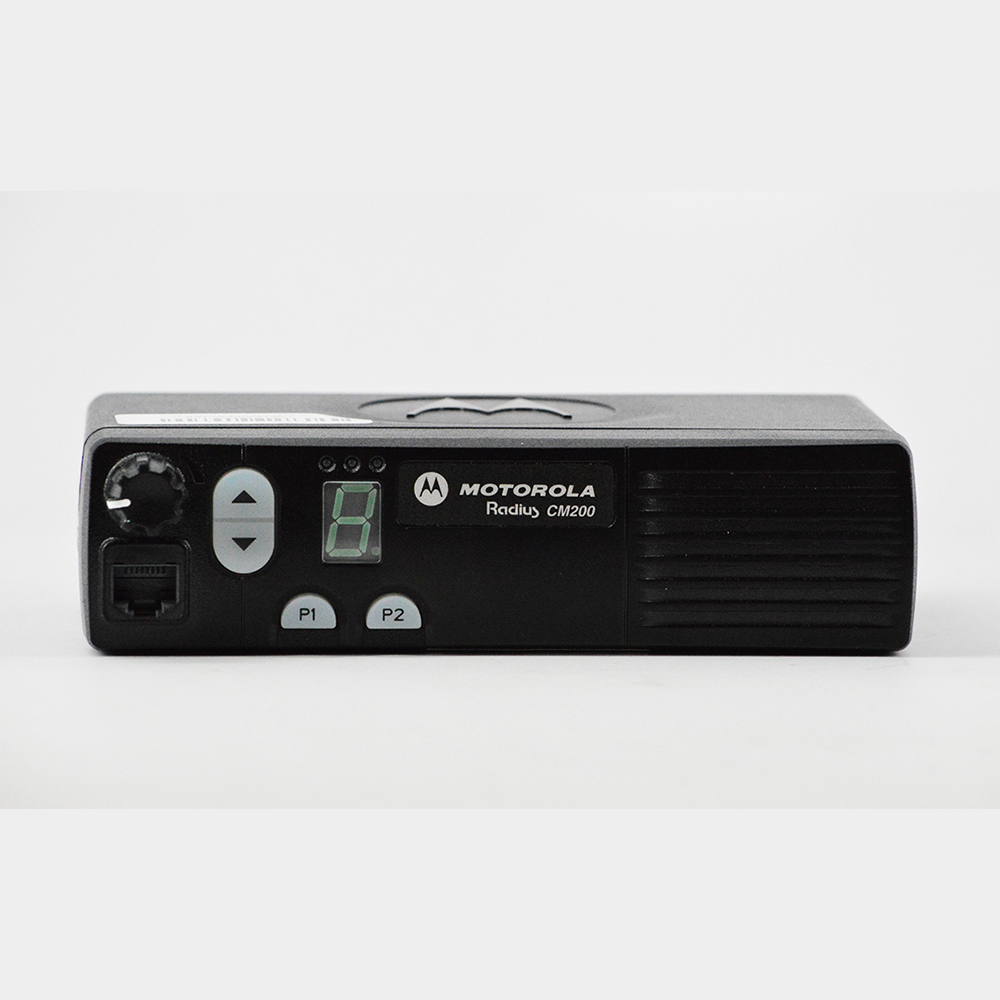
The Motorola CM200 mobile radio solves a problem that open-channel radios create: every driver hears every transmission, regardless of whether the message is for them. Quik Call II selective calling changes that. A dispatcher sends a two-tone sequence that opens the speaker only on the targeted radio. The other three drivers on the same frequency hear nothing. Their radios stay silent. The call reaches the right vehicle without cluttering the channel for everyone else.
Beyond selective calling, this Quik Call II selective calling radio enforces disciplined airtime through three built-in guards. Priority Scan continuously monitors a designated emergency channel while scanning other frequencies, so a distress call never goes unheard because the radio was parked on the wrong channel. The Time-Out Timer cuts transmission after a configurable duration, preventing a stuck microphone from jamming the frequency. Busy Channel Lockout blocks transmit when another station is already talking, eliminating the two-people-stepping-on-each-other problem. These features—common in public safety radios but rare in commercial analog units—make the CM200 the model for fleets where radio discipline directly affects safety and billing accuracy.
Description
We supply original Motorola Solutions products through our authorized distribution channel. Every unit includes factory packaging, original accessories, and full manufacturer warranty eligibility. Motorola®, MOTOTRBO™, and APX™ are registered trademarks of Motorola Solutions, Inc.
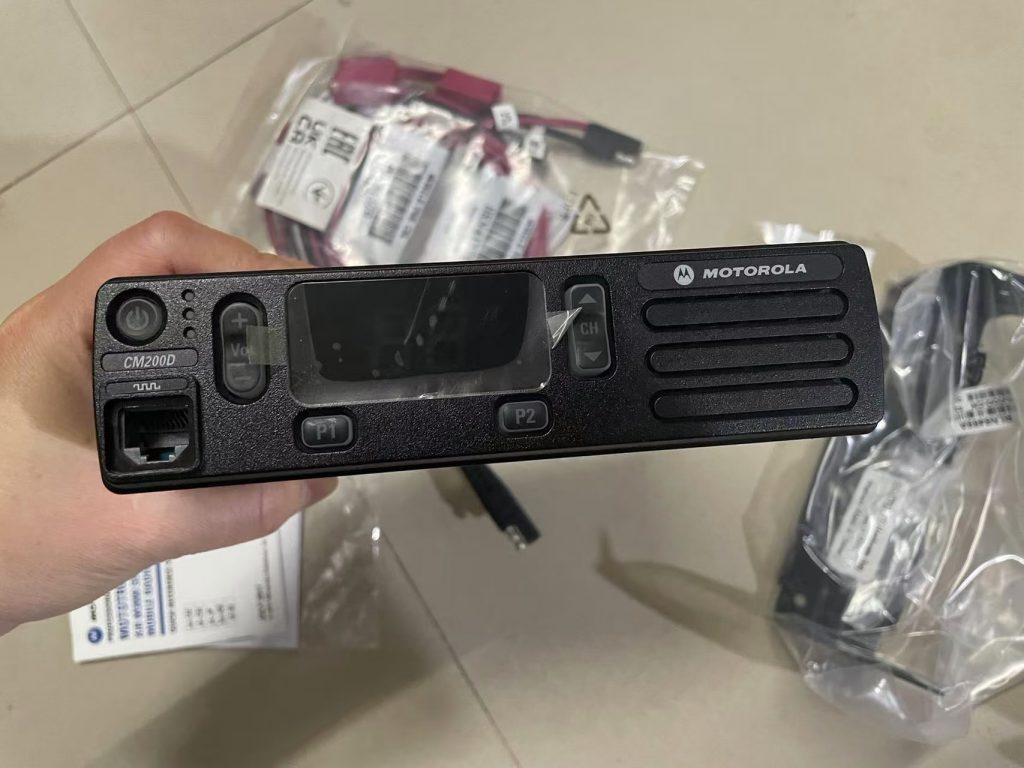
A driver pressed against a seatbelt cannot see a stuck microphone. A dispatcher prioritizing a delivery schedule cannot police every transmission. The Motorola CM200 mobile radio handles both problems automatically. It brings signaling features from Motorola’s professional line into a commercial-grade analog chassis.
Quik Call II: The Channel Stays Quiet Until Your Name Is Called
Open-channel radios force every user to filter every transmission mentally. The Motorola CM200 mobile radio uses Quik Call II to make that filtering automatic. Each radio is programmed with a unique two-tone sequence. When the dispatcher sends that sequence, the target radio unmutes. All other radios on the same frequency stay silent. A concrete pump operator hears only the calls meant for the pump truck. The batch plant operator hears only the calls meant for the plant. Both share one frequency. Neither hears the other’s traffic. This cuts driver fatigue from constant background chatter. It also reduces missed calls caused by a driver tuning out a noisy channel.
Priority Scan and Time-Out Timer: Automatic Discipline for Shared Frequencies
Shared channels break down when one user blocks the frequency. This priority scan analog mobile addresses that with two countermeasures. Priority Scan toggles between a home channel and secondary channels. Even while scanning, the radio checks the priority slot on every pass. A fleet-wide emergency broadcast on channel one overrides whatever channel the driver is listening to. The Time-Out Timer cuts power to the transmitter after a preset transmission length. A mic wedged under a seat cushion stops jamming the repeater after sixty seconds instead of draining the battery for an entire shift. Busy Channel Lockout adds a third layer: the radio refuses to transmit if the frequency is already in use, preventing the collision that produces garbled audio on both ends.
Signaling Features Without the Public Safety Price Tag
Selective calling, priority scan, and transmission timers typically appear on radios costing three times the price of an entry-level commercial mobile. This signaling-equipped fleet radio packages those capabilities into the CM series form factor. The four-channel capacity is intentional, not a limitation. Each channel can be assigned a unique Quik Call II tone pair, a CTCSS or DCS code, and a scan list membership. A four-channel CM200 configured for a materials delivery fleet covers plant dispatch, site coordination, emergency, and a backup repeater. That covers every operational scenario at a per-unit cost that allows fleet-wide deployment without a capital budget request.
Technical Specifications and Warranty
Every Motorola CM200 mobile radio ships with a compact microphone, mounting bracket, DC power cable, and warranty coverage.
- Frequency Bands: VHF (136-162 / 146-174 MHz) or UHF (438-470 MHz)
- Power Output: VHF 25-45W / UHF 25-40W
- Channels: 4 channels
- Signaling: Quik Call II selective calling (two-tone)
- Scan: Priority Scan with dedicated priority channel
- Safeguards: Time-Out Timer, Busy Channel Lockout
- Display: 1-character numeric LED with three-color status indicators
- Audio: 4 W internal speaker, front-facing