
Walkie-Talkie: The Ultimate Guide to Reliable Two-Way Communication in 2026
Walkie-Talkie: The Ultimate Guide to Reliable Two-Way Communication in 2026
In a world where instant, uninterrupted communication is non-negotiable—whether for construction teams, security personnel, outdoor adventurers, or emergency responders—a high-quality walkie-talkie stands as a cornerstone of efficiency and safety. Unlike smartphones that rely on cellular networks or Wi-Fi, walkie-talkies offer direct, real-time two-way communication with zero call fees, making them indispensable in scenarios where network coverage is spotty or non-existent. This guide will break down everything you need to know about walkie-talkies in 2026: from their core benefits and types to how to choose the right one for your needs, and the latest industry trends shaping their evolution.
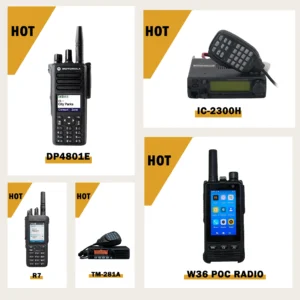
Why Walkie-Talkies (Two-Way Radios) Remain Irreplaceable in 2026
In an era of advanced smartphones and 5G connectivity, you might wonder why walkie-talkies still hold their ground. The answer lies in their unique advantages that address critical gaps in modern communication:
-
Instant Communication Without Delay: With a simple push of the PTT (Push-to-Talk) button, you can communicate with one person or an entire group in milliseconds—no dialing, no waiting for calls to connect. This “one-call-for-all” capability is a game-changer for teams that need to coordinate quickly, such as event staff or emergency crews.
-
No Network Dependence: Unlike cell phones, walkie-talkies operate on radio frequencies, meaning they work seamlessly in remote areas, disaster zones, or indoor spaces (like warehouses or tunnels) where cellular signals are weak or unavailable. During the 2023 Turkey earthquake, rescue teams relied heavily on digital walkie-talkies to coordinate relief efforts when traditional communication networks collapsed, boosting efficiency by 40%.
-
Cost-Effective Long-Term Use: Once you purchase a walkie-talkie, there are no monthly bills, roaming charges, or data fees. This makes them a budget-friendly choice for businesses, organizations, and individuals who need consistent communication without ongoing costs.
-
Durability for Harsh Environments: Modern walkie-talkies are built to withstand tough conditions—waterproof, dustproof, shockproof, and resistant to extreme temperatures. Many professional models meet IP67 or IP68 protection standards and pass military-grade tests, making them ideal for construction sites, outdoor adventures, and industrial settings.
-
Enhanced Security & Privacy: Digital walkie-talkies support advanced encryption (such as AES-256) to prevent unauthorized access to conversations, a critical feature for security teams, law enforcement, and businesses handling sensitive information. Illegal access rates for encrypted models are as low as 0.1%.
Types of Walkie-Talkies (Two-Way Radios): Choose the Right Device for Your Scenario

Walkie-talkies are not one-size-fits-all. They come in different types, each designed for specific use cases. Understanding these categories will help you avoid “overbuying” or “underperforming” equipment:
1. Analog vs. Digital Walkie-Talkies: Which Two-Way Radio Is Better?
The two primary technologies powering walkie-talkies are analog and digital, each with distinct advantages:
|
Feature
|
Analog Walkie-Talkies
|
Digital Walkie-Talkies
|
|
Voice Quality
|
Good, but prone to interference and static
|
Crystal-clear, with AI noise reduction; 20-40% clearer than analog models
|
|
Functionality
|
Basic (call, channel scan)
|
Advanced (encryption, GPS, text messaging, data transmission)
|
|
Spectrum Efficiency
|
Low—uses more frequency space
|
High—supports dual-slot communication (DMR/PDT制式) to maximize frequency use
|
|
Best For
|
Small teams, short-distance use (e.g., retail, small events, home use)
|
Professional teams, long-distance use (e.g., construction, law enforcement, logistics)
|
Note: As of 2025, China’s State Radio Regulation Office has issued a notice requiring professional walkie-talkies to adopt digital systems, accelerating the shift from analog to digital technology.
2. Walkie-Talkie Types by Usage Scenario: Find Your Ideal Two-Way Radio
-
Handheld Walkie-Talkies: The most common type—portable, lightweight, and easy to carry. Power ranges from 0.5W (civilian, license-free) to 5W (professional), with a communication distance of 2-8 km in open areas. Ideal for security guards, tour guides, hikers, and small business teams.
-
Mobile/In-Car Walkie-Talkies: Mounted in vehicles (cars, trucks, boats) with higher power (≥10W) and a longer communication range (up to 20 km+). Equipped with GPS, recording, and other features, they’re perfect for logistics fleets, taxi companies, and long-haul drivers.
-
Repeater Systems: Not standalone devices, but critical for extending communication range. Repeaters receive and retransmit signals, covering large areas (e.g., stadiums, industrial parks, cities). They support full-duplex communication and are essential for large-scale events or complex terrains.
-
IP/4G/5G Walkie-Talkies: Combine radio technology with internet connectivity to enable nationwide or even global communication. They break distance limits, support video calls, and integrate with IoT systems—ideal for cross-region logistics, smart cities, and remote teams.
-
Specialized Models: Designed for extreme environments, such as explosion-proof walkie-talkies (for chemical plants, mines) and waterproof models (for marine use, outdoor adventures). These meet industry-specific safety standards (e.g., CQST certification for explosion-proof devices).
How to Choose the Perfect Walkie-Talkie: 5 Key Tips for Selecting a Two-Way Radio (2026 Buying Guide)
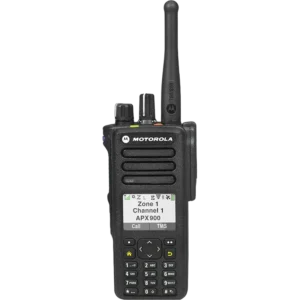
With so many options available, selecting the right walkie-talkie depends on your specific needs. Follow these steps to make an informed decision:
1. Define Your Communication Range
The first question to ask: How far do you need to communicate? Distance is affected by power, terrain, and obstacles (buildings, trees):
-
Short distance (2-3 km): 0.5-2W civilian models (license-free) for retail, hotels, or home use.
-
Medium distance (3-8 km): 3-5W professional models for construction sites, parks, or small fleets.
-
Long distance (10 km+): 10W+ mobile models or IP/4G/5G walkie-talkies for cross-region communication. Recommended models include China Mobile He Talk CM26, a lightweight badge-style walkie-talkie weighing only 35.5g, with nationwide public network coverage, one-hand blind operation, and high-sensitivity microphones for clear communication in noisy environments—ideal for property security, hotel services, and tour guides.
2. Choose Between Analog and Digital
For small teams with basic needs, analog models are affordable and easy to use. Recommended analog options include Motorola T-4508 and T-5628, which are license-free civilian models with simple operation, suitable for short-distance scenarios like small restaurants, retail stores, and outdoor gatherings. For professional teams that require clear voice, security, and advanced features, digital models are worth the investment—such as Motorola GP338D, a digital walkie-talkie with excellent audio quality, smart noise cancellation, and IP57 waterproof rating, supporting both analog and digital modes for a smooth transition to digital systems. Lisheng Communication’s R series DMR digital walkie-talkies are also a great choice, complying with ETSI DMR Tier 2 standards and CE, FCC certifications, compatible with mainstream brands, and suitable for professional team collaboration. If you’re part of a large organization, consider future-proofing with digital devices to comply with emerging regulations.
3. Check Battery Life
Battery life is critical for all-day use. Look for lithium-ion batteries (longer life, faster charging) with the following specs:
-
Daily use (8-10 hours): 2000-3000mAh batteries.
-
Extended use (12+ hours): 3000mAh+ batteries (e.g., 3350mAh models for cluster communication, 5000mAh models for outdoor use with 7-day standby).
-
Bonus: Type-C fast charging to avoid downtime. For outdoor enthusiasts, models like Aiqishi and Waimaitong’s MESH + 5G integrated walkie-talkies are highly recommended—they support stable communication within 800 meters in signal-free mountainous areas via MESH networking and nationwide communication via 5G, with AI noise reduction, 15+ hours of battery life, and IP67 waterproof rating, perfect for motorcycle tours and outdoor adventures.
4. Prioritize Durability and Protection
Consider the environment where you’ll use the walkie-talkie:
-
Indoor/gentle use: IP54 protection (dustproof, splashproof).
-
Outdoor/harsh use: IP67 or IP68 protection (waterproof, dustproof, submersible).
-
Industrial/high-risk use: Military-grade shock resistance and explosion-proof certification. For high-security scenarios, China Telecom’s quantum encryption walkie-talkies, showcased at MWC 2026, offer advanced security features to protect sensitive communications, suitable for government agencies and high-security industrial sites.
5. Look for Essential Features
Avoid unnecessary features that add cost. Focus on what you need:
-
Team coordination: Group call, private call, channel scan.
-
Harsh environments: Noise cancellation (AI降噪), waterproof design.
-
Security: Encryption (AES-256), password protection.
-
Outdoor/adventure: GPS/Beidou positioning, emergency alarm.
-
Professional use: Data transmission, integration with IoT systems, repeater compatibility.
Recommended Walkie-Talkie Models: Two-Way Radio Core Parameters Comparison
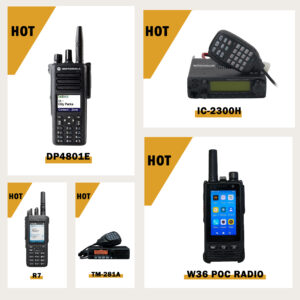
To help you compare the recommended models at a glance, we’ve summarized their core parameters, including power, communication range, durability, and key features, to match your specific usage scenarios:
|
Model
|
Type
|
Power
|
Communication Range
|
Protection Level
|
Battery Life
|
Key Features
|
Best For
|
|
Motorola T-5628
|
Analog
|
0.5W
|
Up to 3km (open area)
|
Basic
|
27 hours (3 AA batteries)
|
20 channels, 38 CTCSS, backlight, 5 call tones
|
Small teams, home use
|
|
Motorola GP338D
|
Digital
|
4W
|
Up to 8km (open area)
|
IP57, Military Grade
|
40% longer than analog models
|
AI noise reduction, text messaging, dual-mode (analog/digital)
|
Professional teams
|
|
China Mobile He Talk CM26
|
IP/5G
|
N/A (public network)
|
Nationwide (5G coverage)
|
IP54+
|
All-day use
|
35.5g lightweight, one-hand blind operation, high-sensitivity mic
|
Security, hotel services
|
|
Aiqishi MESH+5G
|
IP/5G+MESH
|
N/A
|
800m (MESH), nationwide (5G)
|
IP67
|
15+ hours
|
AI noise reduction, Type-C fast charging
|
Outdoor adventures, motorcyclists
|
|
China Telecom Quantum Encryption
|
Digital/Quantum
|
4W
|
Up to 8km (open area)
|
IP57
|
All-day use
|
Quantum encryption, end-to-end security
|
High-security scenarios
|
Note: All models comply with CE and FCC certifications, suitable for global use. The communication range is for reference only, which may vary according to terrain and obstacles.
2026 Walkie-Talkie Trends: What’s Next?
The walkie-talkie industry is evolving rapidly, driven by AI, 5G, and IoT technologies. Here are the key trends to watch:
-
AI Integration: AI-powered walkie-talkies now offer offline voice recognition (accuracy >95%), automatic work order extraction from calls, and smart noise cancellation—reducing human error and improving efficiency. For example, supermarket teams using AI walkie-talkies have seen a 20% increase in task response speed.
-
5G & Cloud Connectivity: 5G walkie-talkies eliminate distance limits, support high-definition video calls, and enable real-time data sharing (e.g., GPS location, sensor data). Cloud-based management platforms allow teams to monitor devices, manage channels, and track usage remotely.
-
IoT Integration: Walkie-talkies are becoming “smart hubs” that connect to industrial sensors, smart locks, and other IoT devices. In smart factories, for example, walkie-talkies can trigger work orders when keywords like “equipment failure” are detected, boosting efficiency by 50%+.
-
Modular Design: Modular walkie-talkies allow users to add features (e.g., explosion-proof modules, extended batteries) as needed, reducing upfront costs and improving flexibility. This is especially popular in industries with changing requirements, like energy and construction.
-
Global Market Expansion: Chinese walkie-talkie manufacturers are gaining traction in global markets, particularly in “Belt and Road” countries, thanks to their cost-effectiveness and compliance with international standards (CE, FCC). The Asia-Pacific region already accounts for over 35% of the global market share.
Final Thoughts: Invest in Reliable Communication
A walkie-talkie is more than just a communication tool—it’s a safety net, a productivity booster, and a cost-effective solution for teams of all sizes. Whether you’re a small business owner, an outdoor enthusiast, or a professional in emergency services, choosing the right walkie-talkie will ensure that you stay connected when it matters most.
In 2026, the focus is on digitalization, smart features, and durability. By prioritizing your specific needs—range, environment, features—and staying updated on industry trends, you can select a walkie-talkie that will serve you well for years to come. All recommended models above comply with international certifications such as CE and FCC, ensuring they meet global market standards for export and overseas use. Ready to find your perfect communication partner? Explore our range of professional walkie-talkies tailored to every scenario.