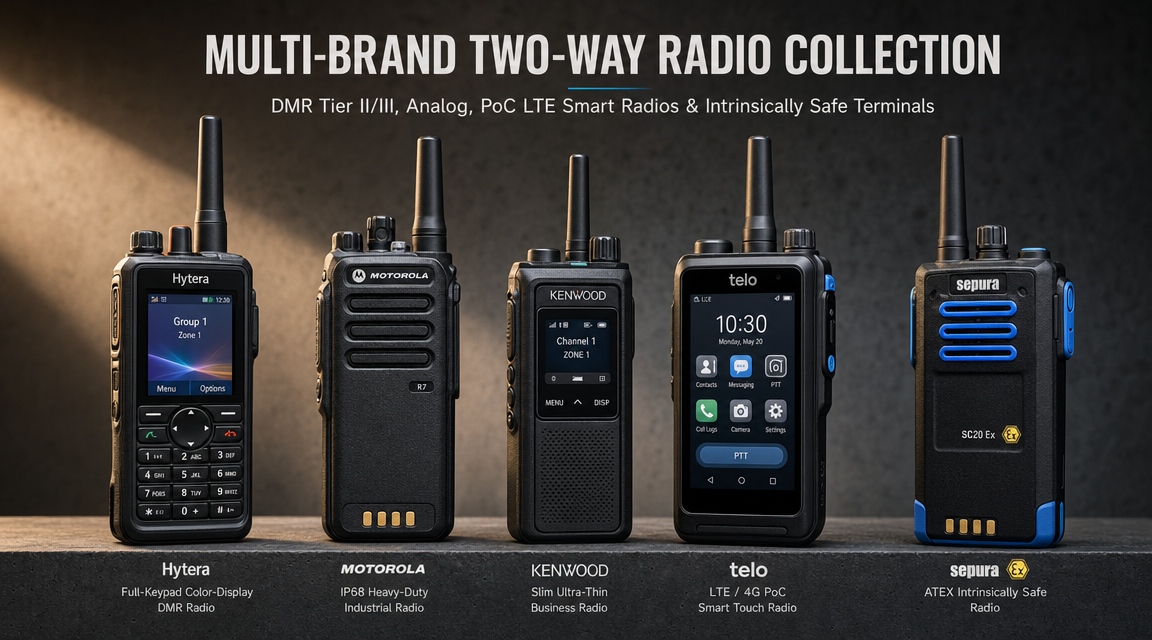
Mixed fleet radio network: old and new radios on one channel plan
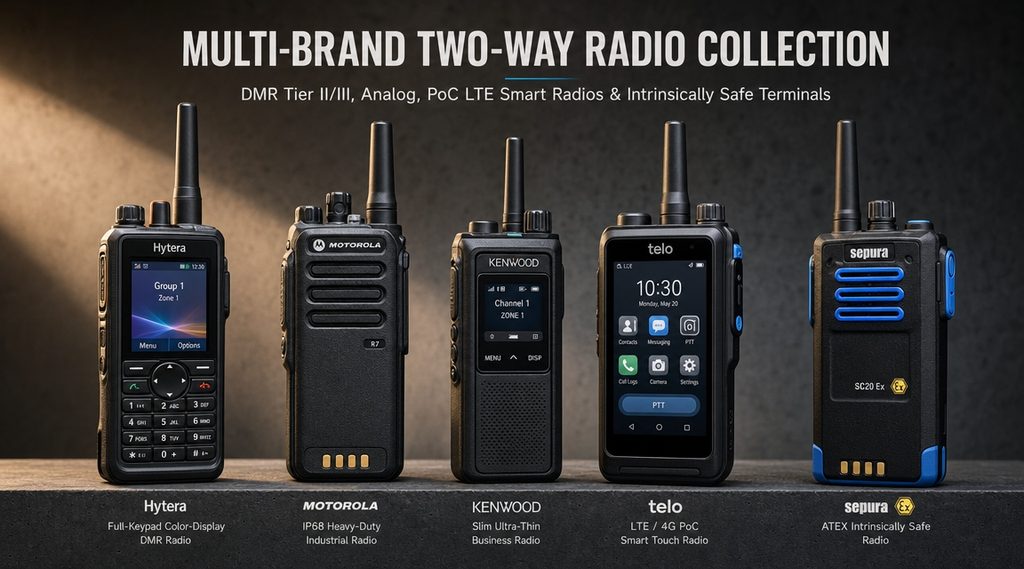
A mixed fleet radio network is not a technology choice. It is what you already own, plus the smallest amount of new equipment that keeps everyone talking.
Most plants reach this point the same way. A new digital order arrives, the old analog sets still work, and nobody wants to scrap four hundred units that pass every test.
The trap is treating the two halves as separate projects. They share one license, one site and one set of users.
This guide sets out the regulatory frame, the channel and tone plan, a stability test you can sign, and a four-step upgrade path.
Why mixed fleets happen
Almost every mixed fleet is the result of one of three ordinary events.
Three ways a fleet becomes mixed
- A department buys new digital portables and keeps the old ones as spares.
- A site is acquired with its own radios, already programd and in daily use.
- A repeater is upgraded, but handhelds are replaced over three budget years.
In each case, the radio fleet is one system with two generations inside it. The planning has to match that reality.
What interoperability really means
The word gets used for three different things, and only one of them is free.
Same channel, same mode is free. Two analog radios on one frequency with matching tones always work.
Same channel, different mode needs a radio that can switch modes. Analog and digital cannot share one transmission.
Different channels, bridged needs extra hardware. A bridge adds latency, a failure point and a configuration to maintain.
Write down which of the three you actually need before buying anything. A network built for the third case costs several times one built for the first.
The regulatory frame that decides your options
In the United States the migration is not free-form. Bandwidth, efficiency and certification decide which combinations are lawful.
Bandwidth: 20, 11.25 or 6 kHz
47 CFR 90.209(b)(5) sets the standard channel spacing and authorized bandwidth by band.
For 150–174 MHz the table shows 7.5 kHz spacing and an authorized bandwidth of 20, 11.25 or 6 kHz.
For 406–512 MHz it shows 6.25 kHz spacing and the same three bandwidth options.
The footnote explains the mapping. A radio designed for 25 kHz channels is authorized 20 kHz, one designed for 12.5 kHz is authorized 11.25 kHz, and one designed for 6.25 kHz is authorized 6 kHz.
That single sentence tells you what your license will actually say, whatever the sales sheet claims.
The 12.5 kHz line of 2013
The same footnote ends with a deadline. All stations must operate on channels of 12.5 kHz or less from 1 January 2013, unless they meet the efficiency standard of § 90.203(j)(3).
So a legacy 25 kHz analog system is not simply old. It is operating under an exception, and the exception has to be demonstrated.
When a plant plans a mixed fleet radio network, this is the clause that decides whether the old channel plan can stay as it is.
The efficiency standard that favors digital
§ 90.203(j)(3) requires certification at one voice channel per 12.5 kHz of channel bandwidth.
§ 90.203(j)(5) raises that for grants received on or after 1 January 2011 to one voice channel per 6.25 kHz.
Now do the arithmetic on a DMR carrier. Two alternating time slots inside a 12.5 kHz emission give two talk paths in 12.5 kHz, which is one per 6.25 kHz.
An analog 12.5 kHz channel gives one talk path, which is one per 12.5 kHz. It meets (j)(3) and fails (j)(5).
That is the whole reason a migration is worth the money. You are not buying clearer audio. You are buying a second voice path inside spectrum you already pay for.
Analog capability is written into certification
Analog did not disappear from the rules either. § 90.203(j)(1) grants certification for certain public safety band equipment only if it can operate in analog FM on the nationwide interoperability channels.
That is why dual-mode hardware exists at all. The regulator wants a fallback path that any agency can reach.
For a plant, the practical reading is simple. Analog capability is a feature you keep, not a stage you leave behind.
Analog and digital side by side
The practical question in a mixed fleet radio network is narrow. What happens when these two kinds of radio meet on the air?
What a digital radio does on an analog channel
Most DMR portables keep a conventional analog FM mode. Selected on a channel, the radio behaves as an analog set.
It transmits a 12.5 kHz FM carrier with the tone or code you programd. A legacy analog radio hears it normally.
Two conditions apply. The model must actually include the analog mode, and the channel must be programd as analog, not digital.
Confirm both on the datasheet and in the codeplug. Analog mode is sometimes a firmware feature rather than a standard inclusion.
What an analog radio can never do
A DMR carrier is not continuous FM. It is a stream of two-slot TDMA bursts carrying synchronisation and signalling.
An analog radio has no way to unpack that. It reproduces the envelope as a harsh, pulsing noise that users describe as a machine gun.
That noise is the most common complaint after a partial rollout. It is also the clearest evidence that a channel was programd in the wrong mode.
Repeater modes: one at a time, or both?
A repeater channel normally runs one mode. Digital traffic on an analog repeater channel is unintelligible, and the reverse is also true.
Some repeaters detect the incoming mode and switch automatically. That is convenient and it must be confirmed per model, not assumed.
Automatic switching also has a cost. The repeater spends time deciding, and a short transmission can be clipped at the start.
Ask the supplier two questions: which modes the repeater channel supports, and whether switching is per channel or automatic per call.
Write both answers into the acceptance criteria. A verbal “it does both” is not a specification.
Bridges and their limits
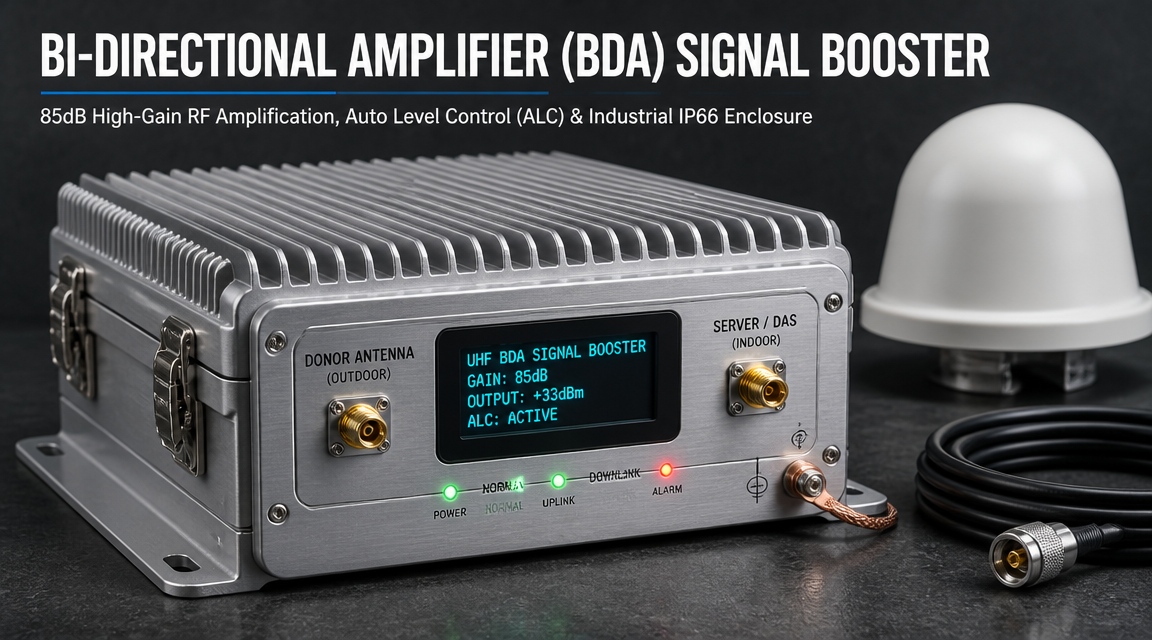
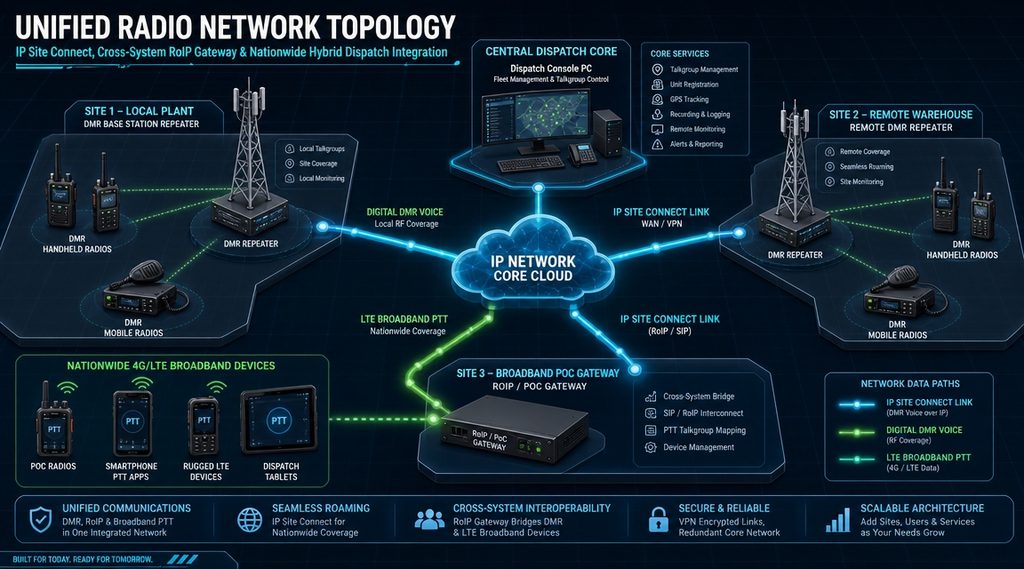
A bridge or gateway connects an analog channel to a digital talkgroup. It is the only way to join two networks that cannot share a mode.
It also introduces delay, because the audio is decoded, buffered and re-encoded. Measure the delay before you accept it.
Bridges drop the identity of the speaker in most designs. The digital side sees a gateway, not a person.
Treat a bridge as a temporary answer for a specific pair of channels. Building a permanent network on bridges is how projects become fragile.
Channel plan for a mixed fleet
A mixed fleet radio network lives or dies on one document: the channel plan. It has to be readable by a programr who has never met the users.
Split the plan into analog and digital zones
Give analog channels one contiguous block of the license and digital channels another. Do not interleave them.
Adjacent channels of different modes are a bad pairing. A strong analog carrier next door desenses a digital receiver, and the symptom looks like poor coverage.
Where the license is tight and the two blocks must touch, leave one channel unused as a guard between them.
Keep one analog channel with no tone as the site-wide fallback. It is the channel you use when a contractor arrives with a radio you have never seen.
Tone and code planning
CTCSS and DCS do not add capacity. They gate the audio, so a receiver stays quiet until it hears the right tone or code.
Users often call this privacy. It is not. Anyone on the frequency can hear the conversation with the tone turned off.
Allocate tone by zone, not by department. Zones stay stable when people change jobs; departments do not.
Reuse the same tone on channels that are geographically far apart, and never on adjacent channels.
Reach for DCS where tone falsing is a problem. Hum, noise and a nearby carrier can all imitate a CTCSS tone.
Colour code and talkgroup planning
On the digital side the gate is the color code, and the address is the talkgroup or individual ID.
Use one color code per repeater or per site. A second code on the same machine is a support call waiting to happen.
Number talkgroups in blocks by function, with room to grow. Leave gaps now, because renumbering a live fleet is far more expensive than reserving numbers.
Analog users carry no identity. Where a console is in use, name each analog channel so it maps to the talkgroup that covers the same people.
Naming that survives a console
Program a channel alias that states zone, function and mode: PLANT-CRANE-AN and PLANT-CRANE-DM.
Two radios that look identical on a desk are distinguishable on screen, and a dispatcher can tell a caller which one to select.
Keep the alias short enough to display. A truncated name is worse than a shorter, deliberate one.
Print the alias list and post it where radios are issued. Users remember words better than channel numbers.
A worked channel table
| Alias | Mode | Gate | Address | Users |
|---|---|---|---|---|
| PLANT-ALL-AN | Analog | No tone | — | Fallback, visitors |
| PLANT-OPS-AN | Analog | Tone A | — | Legacy portables |
| PLANT-CRANE-AN | Analog | Tone B | — | Crane crew, old sets |
| PLANT-OPS-DM | DMR | CC 1 | TG 101 | Operations, new sets |
| PLANT-CRANE-DM | DMR | CC 1 | TG 201 | Crane crew, new sets |
| PLANT-MAINT-DM | DMR | CC 1 | TG 301 | Maintenance |
The table is a template, not a recommendation. Its value is that every row answers the same four questions in the same order.
Who owns the codeplug
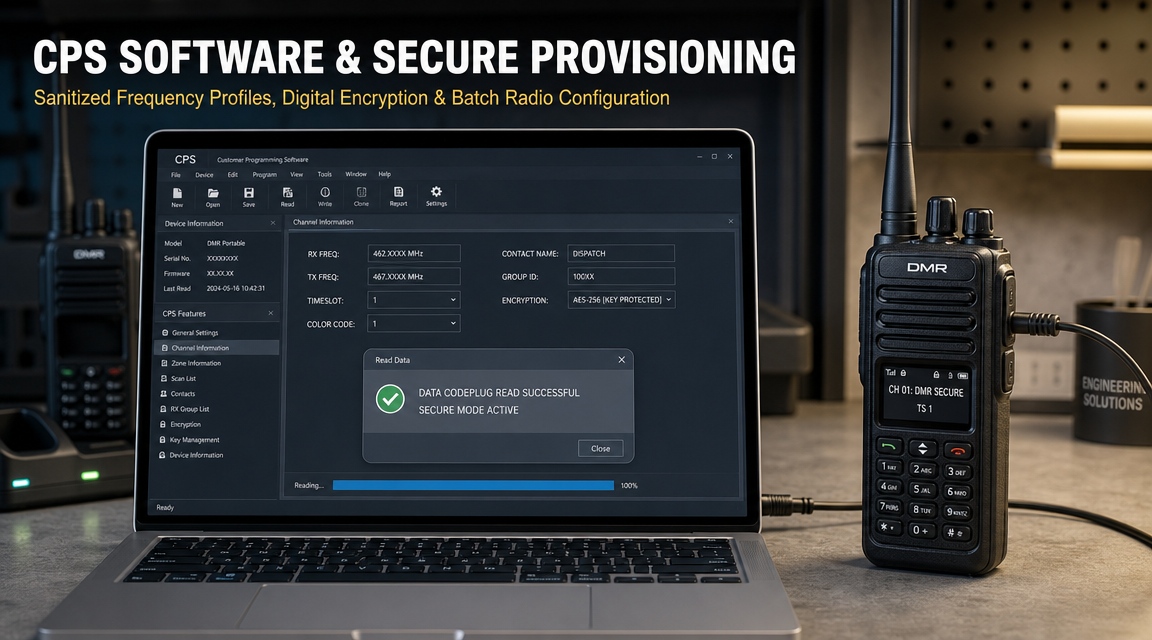
The codeplug is the file that holds every channel, tone and alias. Treat it as a controlled document, not as a laptop folder.
Name one owner and one deputy. Keep a dated copy for every version issued, and record which serial numbers received it.
When a technician leaves, the fleet should not lose its memory with them. The codeplug file and the channel plan are the institutional memory.
Stability testing
Stability is the property a mixed fleet radio network loses quietly. Everything works on the day of the demo and fails in week three.
Test three things before rollout: that each mode works alone, that both work at the same site, and that both still work after seventy-two hours.
What to test before rollout
| Test | Method | Pass condition |
|---|---|---|
| Mode isolation | Transmit digital on every digital channel with all analog sets listening | No analog set produces audio |
| Reverse isolation | Transmit analog on every analog channel with digital sets listening | Digital sets stay silent, no false decode |
| Tone decode | Ten transmissions from the edge of coverage on each analog channel | Open squelch on every attempt |
| Talkgroup routing | Call each talkgroup from two locations | Only the addressed group hears the call |
| Scan behavior | Scan a mixed list while a call starts on the last entry | Call is not lost, or loss is documented |
| Adjacent channel | Key the analog channel next to a digital channel | No audible interference on the digital side |
The seventy-two hour soak
Leave the system running for three days with real traffic and a logging tool attached.
Log every transmission with channel, mode, radio alias and signal quality where the infrastructure exposes it.
What you are looking for is not average performance. It is the tail: the calls that failed once, at 03:00, on one repeater.
Edge-of-coverage audio and tone decode
Analog and digital fail differently at the edge, and both failures matter.
An analog signal degrades into noise, and the user keeps talking because they can still hear something.
A digital signal holds clean audio and then stops. Users describe it as the radio cutting out, and they repeat themselves.
Test at the boundary with a fixed script. Read the same twelve words at each test point so two testers can compare results.
Scan and late entry
Scanning a mixed list costs time. The radio has to check each channel, and a call that starts while the scan is elsewhere is missed.
Measure how long a full scan cycle takes on the actual radios, not on the datasheet.
Late entry matters on the digital side. A radio that joins a call already in progress should hear it, and should be tested doing so.
The pass or fail record
Write the result as a signed sheet: test, location, radio alias, result, tester, date.
Keep the sheet with the channel plan. Together they are the only evidence that the fleet was stable before the first complaint.
Repeat the same sheet after any codeplug change, and file it beside the previous one. Drift shows up as a difference between two dated sheets, not as a single bad reading.
Upgrade path
Four phases move a mixed fleet radio network from two generations to one, without a day of silence.
The order is not negotiable. Radios before repeaters, repeaters before talkgroups, talkgroups before retirement.
Phase 1: portables that do both
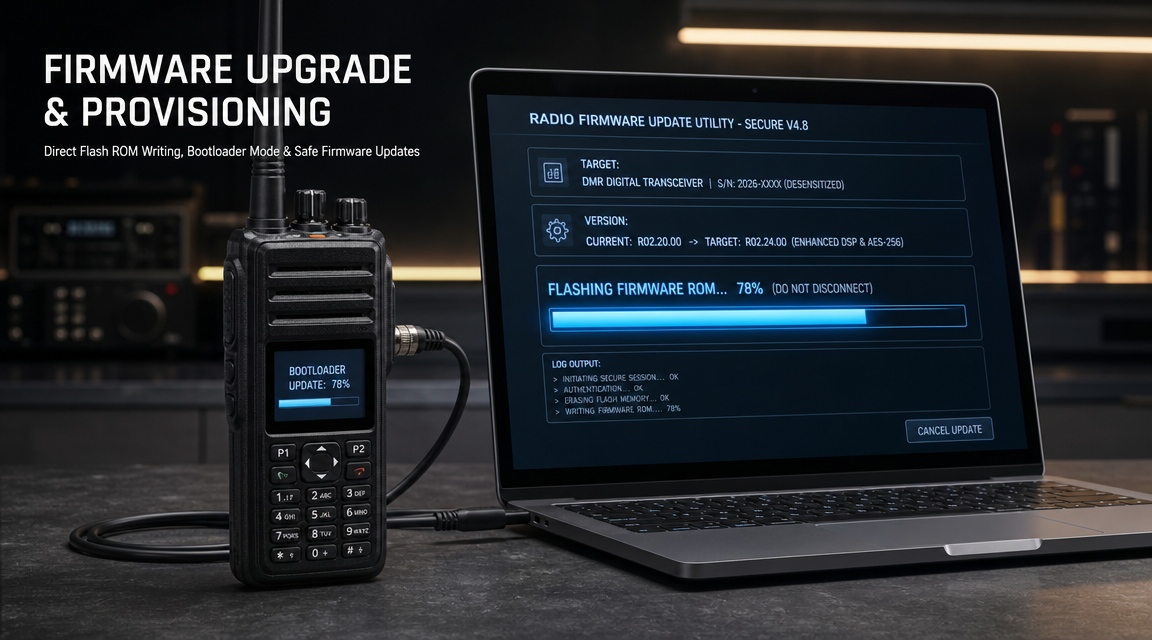
Start with handhelds, because they carry the risk and the cost. Buy dual-mode portables and program both an analog and a digital channel for each user group.
No repeater change is needed in this phase. Users keep the analog channel, and testers use the digital one beside it.
This is where you learn whether audio levels, accessories and charging habits survive the change.
Phase 2: the repeater decision
A digital repeater buys the second talk path. It also fixes the moment when the fleet stops being analog in practice.
Decide between three options: keep the analog repeater and run digital simplex, replace it with a digital unit, or run two units side by side on separate channels.
Two units side by side is the safest and the most expensive. It also keeps an analog path available for the whole migration.
Check the license before ordering. A new emission designator on the authorization is not automatic.
Phase 3: capacity and talkgroups
Once the repeater is digital, the second slot becomes usable. That is the point to re-plan talkgroups instead of translating channel names.
Group by function rather than by radio model. A crane crew should be one group whether its members carry old or new sets.
This is also the moment to write the ID plan, if the fleet will ever use individual calling or dispatch.
Phase 4: what you retire, and when
Retire on evidence, not on a date. A radio leaves service when its battery, its accessory or its channel plan can no longer be supported.
Keep a small analog reserve. Contractors, events and temporary sites will arrive with analog equipment for years.
Update the channel plan on the day each phase closes. A plan that describes last year’s fleet is worse than no plan.
Budget shape
Cost falls into four lines: portables, infrastructure, programming labour and spares.
Programming labour is the line that surprises buyers. Every mode change, tone change and alias change is a bench visit or a template rebuild.
Add a line for test time. Verification at the site edge takes a technician an hour per zone, and it is the hour that prevents the first month of complaints.
Count the hours per radio before the first order. A fleet of four hundred radios is a data-entry project as much as a purchase.
Phase gates
| Phase | Gate to pass before the next one | Evidence |
|---|---|---|
| 1 Portables | Both modes tested on the bench and at the site edge | Signed test sheet |
| 2 Repeater | Digital path stable for one week with real traffic | Soak log |
| 3 Talkgroups | Every group reachable from every zone | Coverage walk record |
| 4 Retirement | Analog reserve in place and documented | Updated codeplug |
A gate that is skipped is a fault that arrives later, when the people who remember the reason have moved on.
Common failures
Three mistakes account for most of the support calls in the first quarter.
Tone written on the wrong side
A radio can transmit a tone, expect a tone, both or neither. Two radios set to opposite expectations stay silent to each other.
The fault looks like a coverage problem and it is a programming table. Check the transmit and receive columns separately on both radios.
Two radios, two audio levels
Analog and digital audio are not the same product at the speaker. Users report that one fleet sounds quiet and the other loud.
Set the level on the accessory you actually issue, then walk the site with both kinds of radio in hand.
Adjust at the radio or the codeplug, not at the user’s habit of holding the speaker closer.
The scan that misses calls
A long mixed scan list looks efficient and behaves badly. The more channels in the list, the longer each cycle.
Move the priority channels to the front and cut everything the user does not need to hear.
If the list must stay long, accept the missed first syllable and tell users to wait before speaking.
Two channel plans in circulation
A second copy of the plan, edited on one laptop, is the quietest failure of all. Half the fleet follows one table and half follows another.
Version every plan with a date and a number, and print that version on the sheet posted in the control room.
Frequently asked questions
Can analog and digital share one repeater channel?
Not at the same instant. One transmission is either an analog carrier or a digital burst stream.
Some repeaters switch between modes automatically, and that is a model feature you must confirm in writing.
Do we need new licenses?
Usually not for the same channels, but the authorization has to describe the emission you actually transmit.
Check with the licensing contact before the first digital carrier goes on air. A mode change is a technical change to the station.
Will a digital radio hear an analog radio?
Only if it is switched to analog mode on that channel. In digital mode it will not decode an analog carrier.
The reverse never works. An analog radio cannot decode a digital transmission at all.
How long can we run both generations?
As long as spares, batteries and programming support last. The practical limit is usually the battery, not the radio.
Plan the retirement of a model when its battery or accessory becomes hard to source, not when the catalogue drops it.
What if the two brands use different programming software?
They almost always do. Budget for two cables, two templates and two people trained to use them.
Keep a single spreadsheet as the master plan, and export each brand’s version from it. That way the differences stay visible.
Contact Us
Send us your license range, the models you already own and the channels in use. We will map the analog and digital zones and quote the dual-mode portables that keep both alive.
A mixed fleet radio network is easier to buy in the right order than to fix after the fact.
Contact our sales manager directly.
Sales Manager: Kevin
WhatsApp: +852 60731163
WeChat: +8616623617128
Email: fengfanannie@163.com